Sustainability is increasingly a competitive differentiator in supply chains, not just a checkbox. More companies expect transparency in how raw materials are sourced, how waste is managed, and how every decision affects forests, communities, and the climate. In the pallet industry, one of the clearest signals of responsible sourcing is FSC certification. For Troymill Wood Products, leaning into FSC-certified wood pallets underscores that the company isn’t just building pallets, it’s investing in a legacy of forest health, supply chain integrity, and long-term value for customers.
In this article, you’ll learn:
- What FSC certification really means
- Why buyers should care about sustainable lumber
- How FSC wood compares to other option
- What Troymill is doing to lead in responsible sourcing
What Is FSC-Certified Wood?
FSC (Forest Stewardship Council) is a globally recognized standard that ensures forest-based products are sourced from responsibly managed woodlands. But what exactly does “responsibly managed” mean? It involves audits, chain-of-custody tracking, and ongoing evaluations of social, environmental, and economic practices.
Key elements of FSC certification include:
- Forest management audits: Independent parties verify compliance with standards on biodiversity, soil conservation, indigenous rights, and forest regeneration.
- Chain-of-custody control: Every step from logging through processing to finished product is monitored to prevent mixing with non-certified wood.
- Segregation & labeling: Certified wood is kept separate, documented, and labeled so buyers can trace the origin.
- Continuous improvement: Certified operations are required to show progress on environmental and social goals over time.
Why FSC Certification Matters for Pallet Buyers
Choosing FSC-certified wood isn’t just about protecting forests; it has real implications for your business, too. Here are several reasons why buyers should make this a priority:
- Environmental Credibility & Risk Mitigation
Using FSC-certified lumber signals a commitment to forest preservation, wildlife habitat protection, and reduced deforestation. That matters in industries mindful of ESG (Environmental, Social, Governance) metrics.
- Market & Export Compliance
Some industries and countries require or prefer FSC or equivalent certifications for import. By purchasing FSC-certified wood pallets, you’re reducing the risk of getting flagged during audits or customs.
For export compliance, it is equally important to meet phytosanitary standards. Pallets often need to comply with ISPM 15 rules governed by the International Plant Protection Convention (IPPC), which ensures that wood packaging materials are treated to prevent the spread of invasive pests.
- Credibility in Supplier Evaluations
Many large corporations use third-party ratings platforms (like EcoVadis) to assess supplier sustainability performance. Showing that your pallets are made from FSC-certified wood can contribute positively to those ratings. See more on EcoVadis and supplier scoring here: ecovadis.com.
- Customer & Stakeholder Trust
Investors, clients, and even employees are increasingly expecting companies to align with their sustainability values. When you can credibly say you use FSC-certified lumber, that strengthens your brand.
Is Pallet Wood Truly Sustainable?
A common question: “Is pallet wood sustainable?” The simple answer is yes, if it is sourced and managed responsibly. Sustainability in pallet wood hinges on:
- Forest renewal: The forest must regenerate faster than or equal to the rate at which it’s harvested. FSC-certified forests have management plans to ensure regeneration.
- Minimal waste: Efficient use of wood, reuse of byproducts, and recycling make the difference.
- Avoidance of illegal logging: Chain-of-custody systems help prevent inclusion of illegally harvested timber.
- Lifecycle thinking: Supporting reuse, repair, recycling, and end-of-life recovery.
Troymill’s commitment extends beyond the use of FSC-certified wood. It ties into its broader circular practices, repair programs, pallet recycling, and landfill diversion, so each board has multiple potential lives.
Nature’s Packaging’s resources on wood packaging and lifecycle assessments help validate the broader environmental benefits of wood-based packaging.
Which Wood Makes the Best Pallet — and Why FSC Matters
When customers ask, “What is the best wood for pallets?”, they’re usually evaluating strength, cost, weight, and durability. The answer often lies in balancing hardwood and softwood, but with one crucial caveat: sourcing matters just as much.
- Hardwood (e.g. oak, maple): strong, durable, ideal for heavy-duty applications
- Softwood (e.g. pine, fir): lighter, more cost-effective, better for less demanding loads
- Engineered mixes or composite boards: used selectively in specialty pallets
Troymill’s Leadership in Sustainable Sourcing
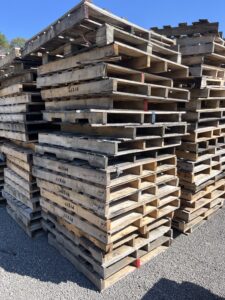
Troymill doesn’t simply source FSC wood as a label, it integrates it into a broader strategy of sustainability:
- Combining FSC-certified lumber with internal recycling and repair programs
- Promoting near-zero landfill operations, ensuring that even offcuts or byproducts are reused or recycled
- Emphasizing industrial lumber recycling so that aged or broken pallets feed back into the system
- Partnering with certification bodies, industry groups, and sustainability platforms to verify and validate practices
By doing all this, Troymill positions itself not just as a pallet wood supplier in Ohio but as a sustainability leader in the pallet sector. That leadership resonates with customers who want their supply chain partners to share their values.
FAQs: Sustainable Forest Practices
Q1. What is FSC-certified wood and why is it important?
FSC-certified wood comes from forests that are managed responsibly under the standards of the Forest Stewardship Council. This certification ensures that lumber is harvested in a manner that protects ecosystems, wildlife, and local communities. For buyers, it guarantees that pallet materials come from truly sustainable lumber sources.
Q2. How does using FSC-certified lumber reduce a company’s environmental footprint?
Choosing FSC-certified lumber ensures that every board comes from responsibly managed forests that protect biodiversity, minimize waste, and promote regeneration. This lowers a company’s carbon footprint and helps meet sustainability goals without compromising pallet strength or performance.
Q3. Is pallet wood sustainable for long-term supply needs?
When sourced responsibly, pallet wood can be a highly sustainable material. Troymill partners with suppliers that meet FSC standards, ensuring that lumber is sourced from renewable forests and does not contribute to deforestation. This creates a dependable source of pallet wood that balances business needs with environmental stewardship.
Q4. What is the best wood for pallets?
The best wood depends on the application. Hardwoods are often used for heavy-duty pallets, while softwoods offer a lighter and more affordable option. With FSC-certified wood, businesses can be confident that both hardwood and softwood choices are responsibly sourced and sustainable.
Q5. Why should companies choose a pallet wood supplier in Ohio that offers FSC-certified lumber?
Working with a supplier like Troymill ensures not only reliable local service but also access to FSC-certified wood pallets that meet both compliance and sustainability standards. This is especially important for companies exporting goods since FSC certification is recognized worldwide as proof of sustainable lumber sourcing.
Take Action: Embed Sustainability Into Your Supply Chain
FSC-certified wood is more than a certification, it’s a bridge between performance, ethics, and credibility in the pallet industry. By incorporating certifications, recycling practices, and end-to-end accountability, Troymill is helping its customers elevate not just their logistics but also their brand.
Visit Troymill’s Sustainability Commitment to see how their approach can align with your company’s environmental goals.
Want to read more? Check out this blog on, Why You Should Choose a Wood Company With Sustainable Lumber.
Have questions? Reach out to our team today.