Pallet Enterprise recently profiled Troymill and the investments we have made as a third-generation, family-owned wood products manufacturer. The August 2026 feature looks at our history, our growth beyond pallets, and the investments we have made in equipment and people. Here is what the story covers and what it means for the buyers we work with.
What did Pallet Enterprise say about us?
Pallet Enterprise ran our profile in its Plant Case Studies series. Writer Rick LeBlanc followed our story from our family roots to where we stand today, and focused on how we have reinvested in capacity and equipment over the last several years.
The article also covers how our plants divide their work and why we keep adding kiln capacity. The sections below pull out the points that matter most if you are evaluating us as a supplier.
How have three generations shaped Troymill?
Troymill grew out of a family lumber business. Brian Schaefer’s father and uncle later acquired a small pallet and crate manufacturer in Middlefield, and that company became Troymill Wood Products. Brian returned to the family business in 2004 and leads Troymill today.
Brian told Pallet Enterprise that what worked for his grandfather did not carry over cleanly to his father’s generation, and that his own approach has had to keep changing as well.
“What my grandfather did worked for him, but it didn’t really work for my father. What my father did worked for him, but it wasn’t going to work for me. The business changes too quickly.”Brian Schaefer, in Pallet Enterprise
For us, that means staying open to what the market is asking for instead of tying the business to one product or one type of customer. Read more about our history and tradition.
Is Troymill only a pallet company?
No. Pallets are our largest product category, and Pallet Enterprise reported that they account for about 60% of our business. The rest comes from industrial lumber, dunnage and blocking, heavy timber products, crates, and specialty wood components.
We run standard 48″ × 40″ GMA pallets in truckload quantities and also produce non-standard sizes at volume, including grooved banding blocks and oversized pallets. Jesse Kleinman, now in his tenth year with us, told the magazine why that mix matters:
“When we hear other manufacturers are slow, it’s often because they’re focused on one thing. They’re overly focused on a 48×40 GMA pallet. We’re not.”Jesse Kleinman, in Pallet Enterprise
That mix keeps us from depending on any single type of order. Pallet Enterprise also noted the range of customers we serve, including steel mills, consumer products companies, automotive manufacturers, and aerospace and defense contractors. See the full list of industries we serve.
What did we invest in after the COVID surge?
Demand ran unusually high across the pallet industry during the COVID years, and our team was stretched to meet it. Brian told Pallet Enterprise that we had become too reliant on outside suppliers and decided to put part of that income back into the areas that had been working hardest with the least support: heat treatment, logistics, IT, and machinery.
Did we add heat treatment capacity?
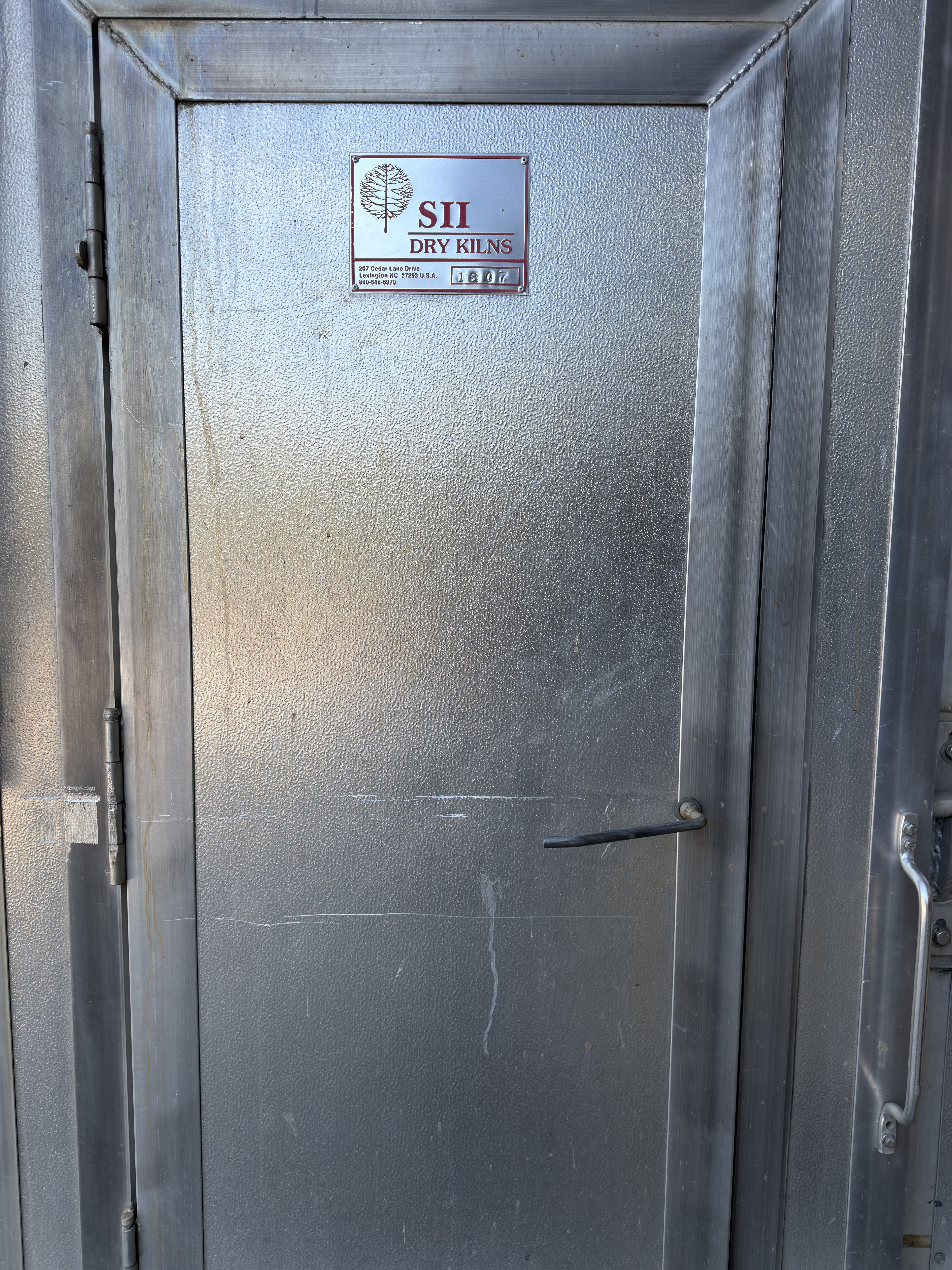
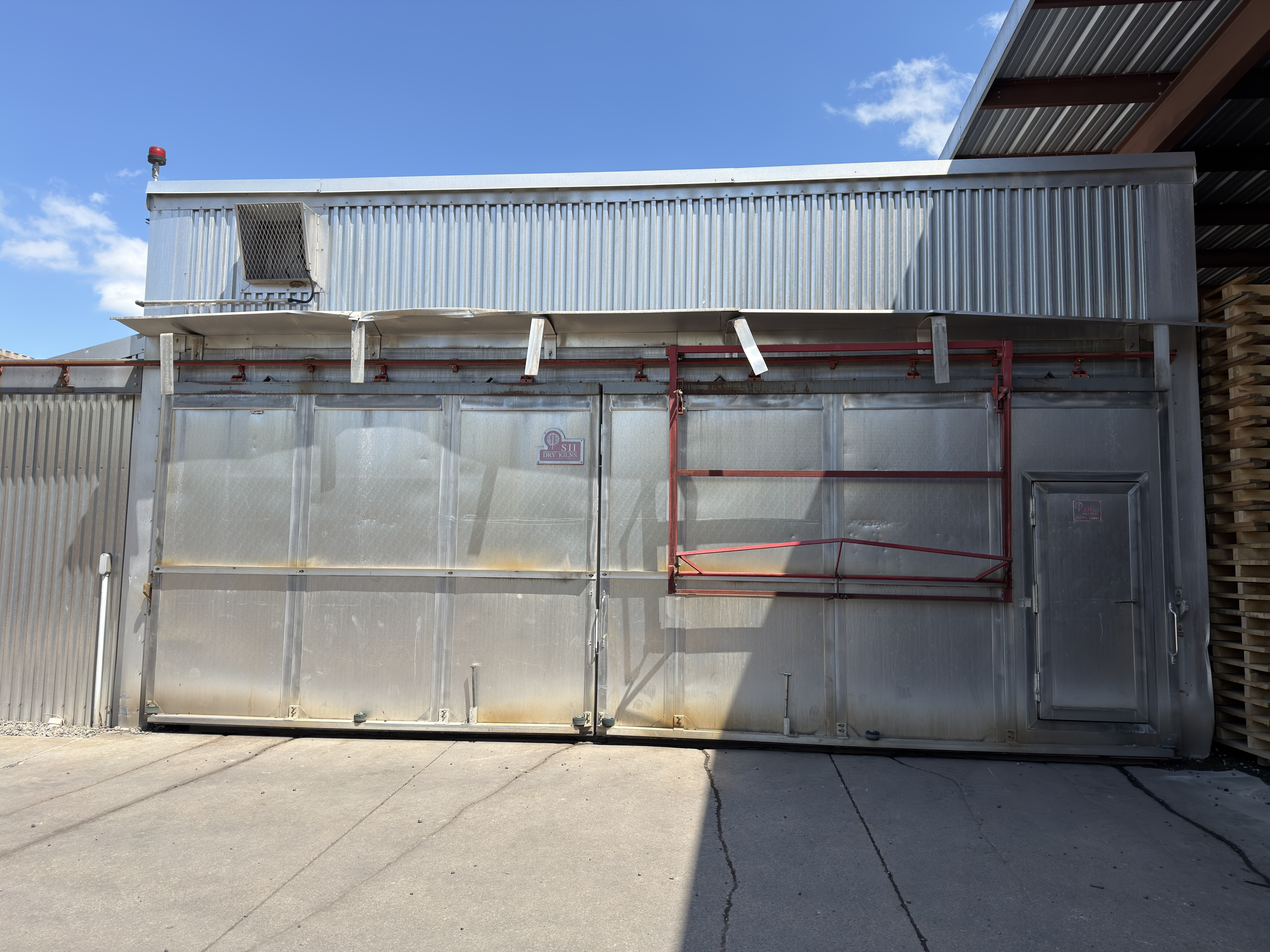
Yes. Demand for heat treatment had long outrun our capacity, so we installed a second kiln in spring 2024, and Pallet Enterprise reported that it doubled our heat treatment capacity. ISPM 15 heat treatment remains available on request and is handled in-house with ALSC-approved IPPC marking, so export orders are not waiting on an outside kiln.
What does the new saw line do?
The new saw line was built to expand our production of grooved stock and banding blocks, which we could not keep up with on our existing lines. We began designing it in 2022 and used the project to add features we wished our current lines had. Pallet Enterprise reported that the line ran about 20% faster than we expected, and that it can cut deck boards at one end while making runners at the other.
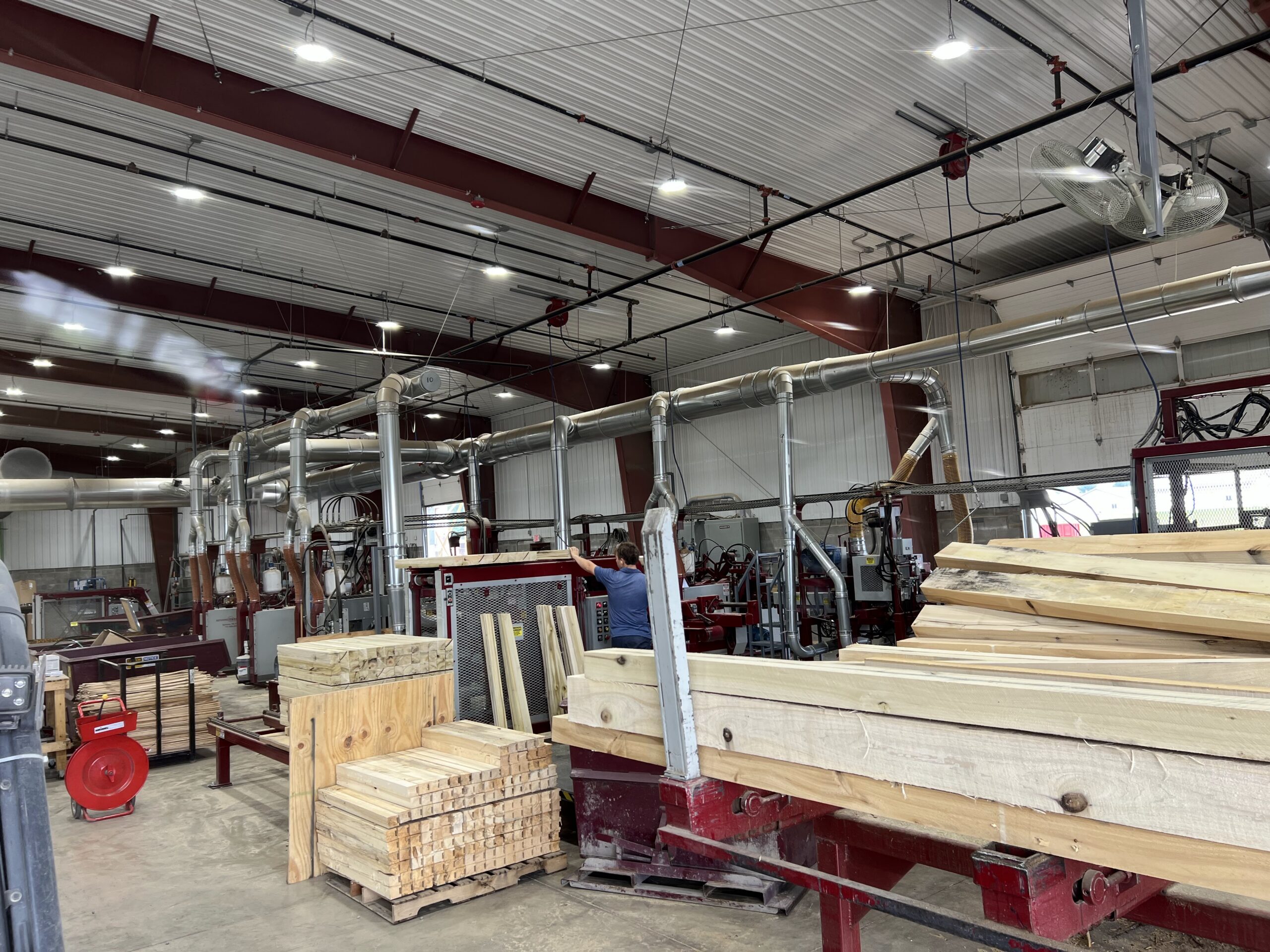
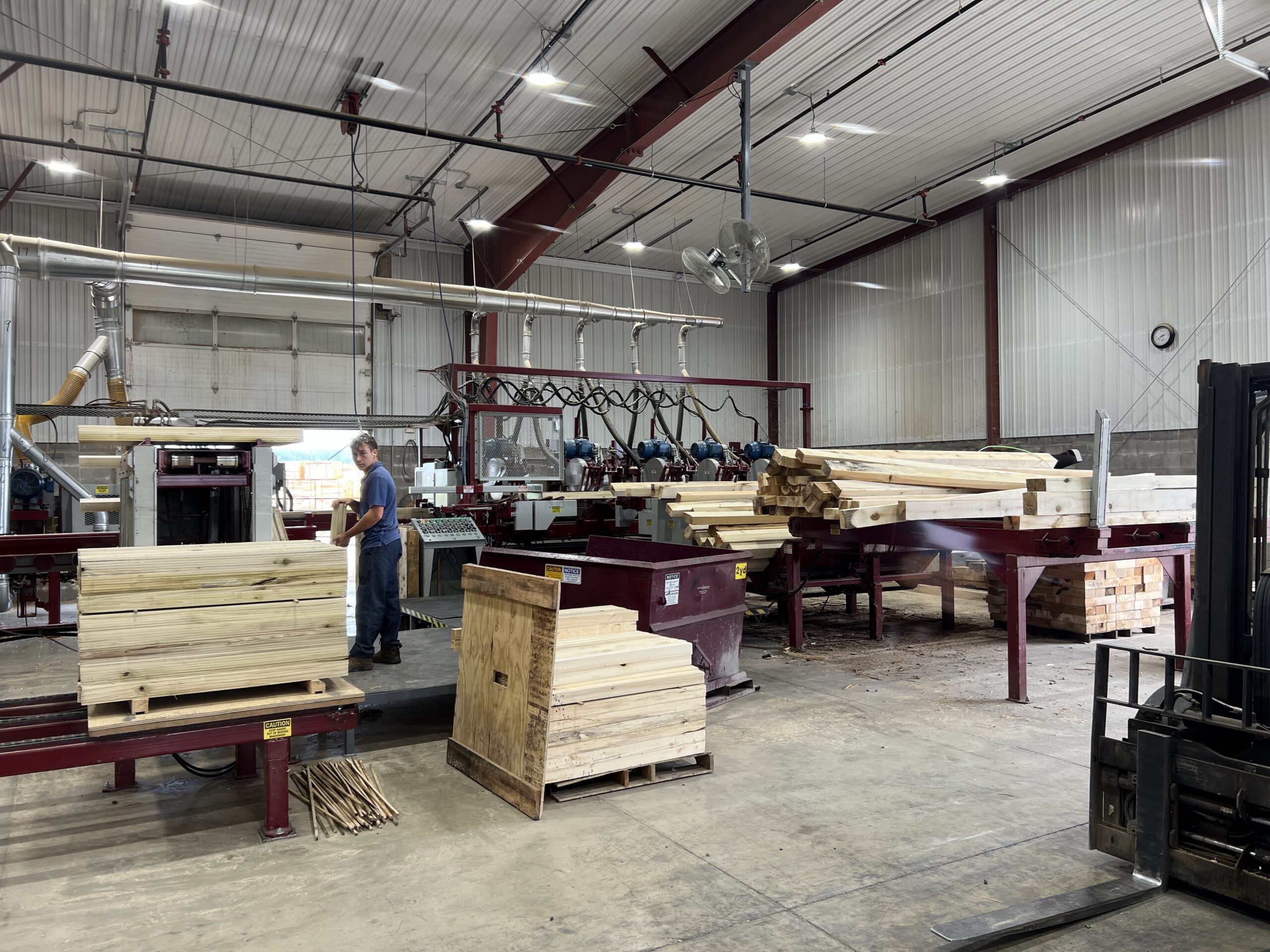
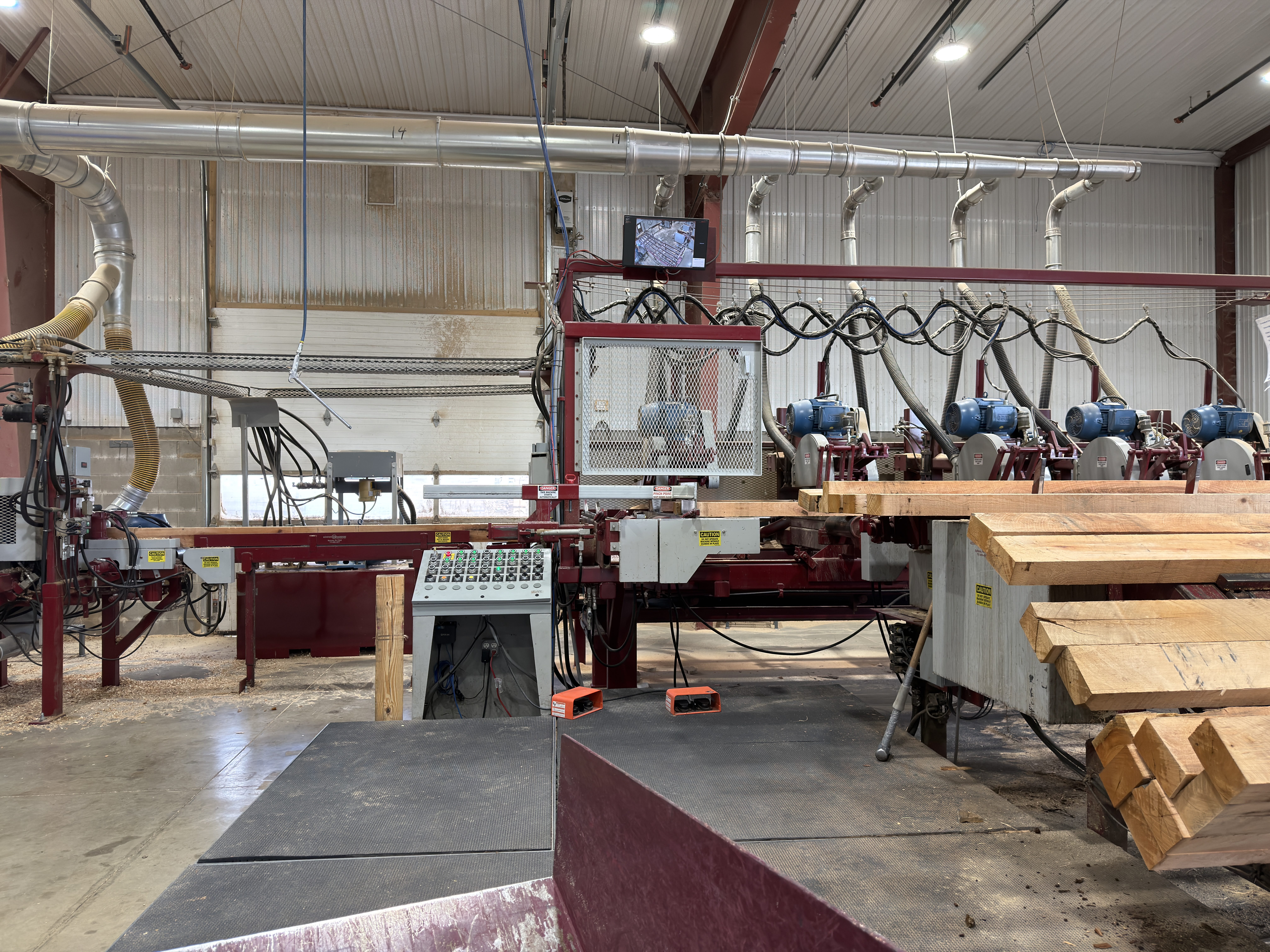
Dust collection over the new line, boards stacked straight off it, and the controls that run it.
We now cut about 95% of the lumber we use in house, which gives us more control over production scheduling and less reliance on outside processors. That includes pre-cut pallet lumber for our own nailer lines.
How do our plants work together?
We operate three manufacturing facilities in Ohio. Our flagship campus in Middlefield is the larger operation. A second Middlefield plant, added through an acquisition and located only a couple of miles away, is smaller and more flexible, and it gives us redundancy. Expedited orders are easier to route through it than through the larger plant.
Our Carrollton plant plays a different role. It extends our geographic reach and gives us access to another labor market and another source of lumber. It also has its own resaw shop and heat treatment system, so it adds production capacity of its own.
Operating multiple facilities gives Troymill added production flexibility and redundancy, helping us respond when schedules change or customers have expedited requirements. We deliver on our own fleet across the Midwest and into the Mid-Atlantic.
Does Troymill build for defense and federal buyers?
Troymill has also expanded its work with federal, state and municipal customers. Pallet Enterprise highlighted the role Michael Schaefer has played in growing that part of the business, including pursuing more complex government and defense opportunities. That work has included specialty packaging and wood products built to detailed government specifications, including custom crates developed for use aboard a U.S. Navy aircraft carrier and specialty wedges produced for another naval requirement.
We are a Certified Small Business with an active SAM.gov registration and past performance that includes work for Tinker Air Force Base and McAlester Army Ammunition Plant. See our federal capability statement for the full details.
What should buyers take from the coverage?
- Our capacity is still growing. We added kiln capacity in 2024 and built a new saw line, and we produce more than 50,000 pallets per week.
- Our product range goes well past pallets. Pallets are about 60% of our business, and the rest serves industrial buyers with lumber, dunnage, crates, and specialty components.
- Multiple plants add flexibility. Expedited orders have a smaller plant to move through, and Carrollton extends our reach.
- Family ownership has lasted three generations. We keep changing how we work as the market changes.
Talk to Troymill
We pair Amish craftsmanship with modern equipment. Our product stays under cover in 150,000 square feet of covered storage, and we deliver on our own fleet.
Our standard builds run approximately 10 business days, and expedited builds run approximately 5 business days. Quotes and drawings come back in 24 hours or less.
Frequently Asked Questions
Where can I read the Pallet Enterprise profile of Troymill?
The profile, titled “Evolving with the Times: Troymill Embraces Change, Investment,” is published on the Pallet Enterprise website and ran in the magazine’s August 2026 digital edition. It was written by Rick LeBlanc for the Plant Case Studies series.
How many pallets does Troymill make per week?
Troymill produces more than 50,000 pallets per week. Pallet Enterprise reported that pallets are the company’s largest product category at about 60% of the business, with industrial lumber, dunnage, crates, and specialty wood components making up the rest.
How many plants does Troymill operate?
Troymill operates three manufacturing facilities in Ohio, two in Middlefield and one in Carrollton. The smaller Middlefield plant gives Troymill redundancy for expedited orders, and Carrollton extends its geographic reach.
Does Troymill offer heat treatment?
Yes. Troymill offers in-house ISPM 15 heat treatment on request, with ALSC-approved IPPC marking, so export orders are not held up waiting on an outside kiln. A second kiln installed in spring 2024 doubled Troymill’s heat treatment capacity.
What does Troymill make besides pallets?
Troymill also produces industrial lumber, hardwood dunnage and blocking, heavy timbers, crates, and specialty items such as coil racks and grooved banding blocks. Product ships from Ohio across the Midwest and into the Mid-Atlantic on Troymill’s own fleet.
How long does it take Troymill to build an order?
Standard builds run approximately 10 business days, and expedited builds run approximately 5 business days. Quotes and drawings come back in 24 hours or less.